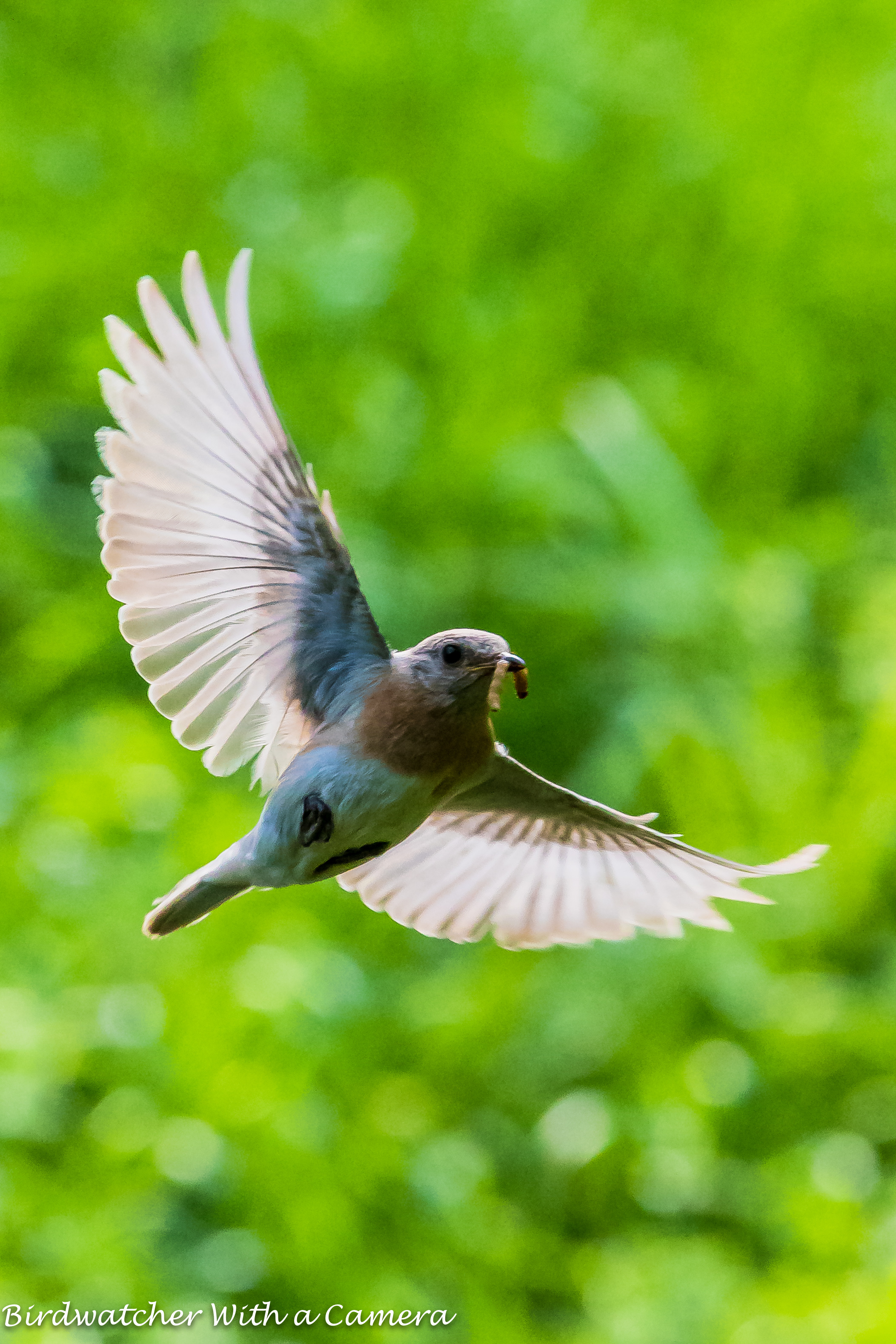
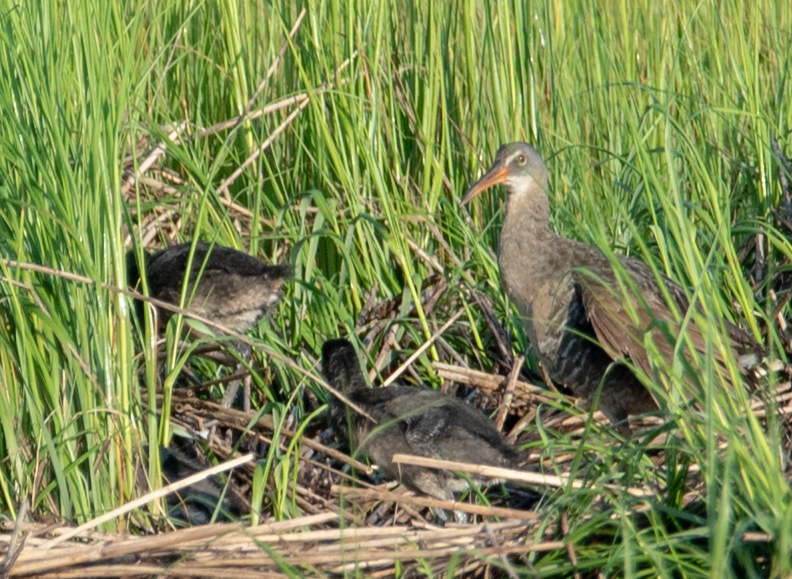
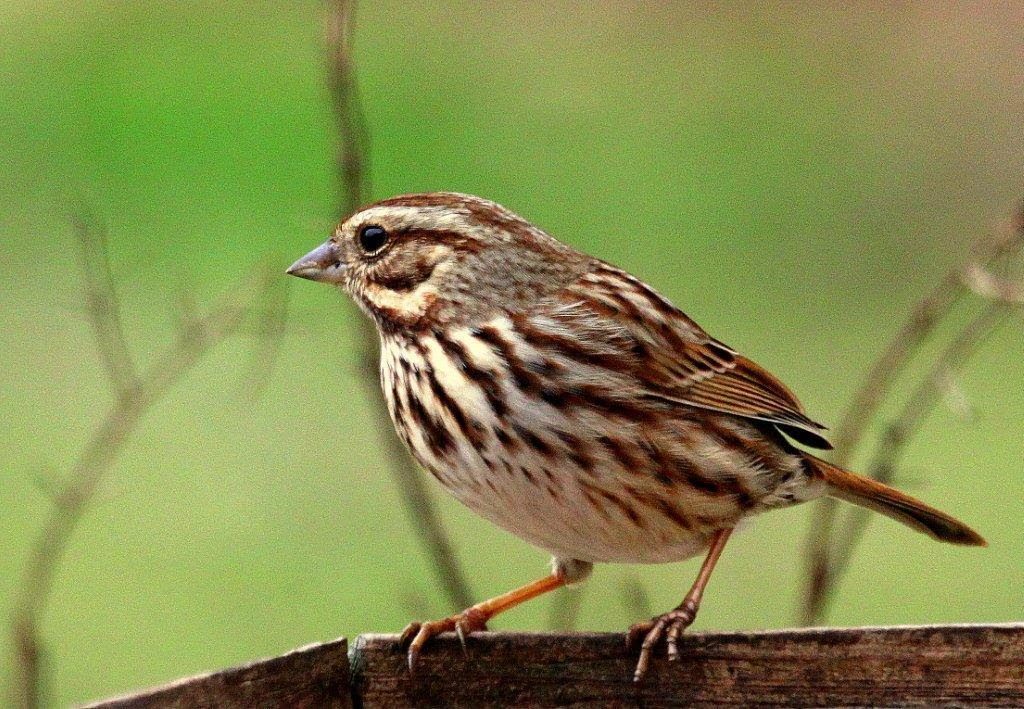
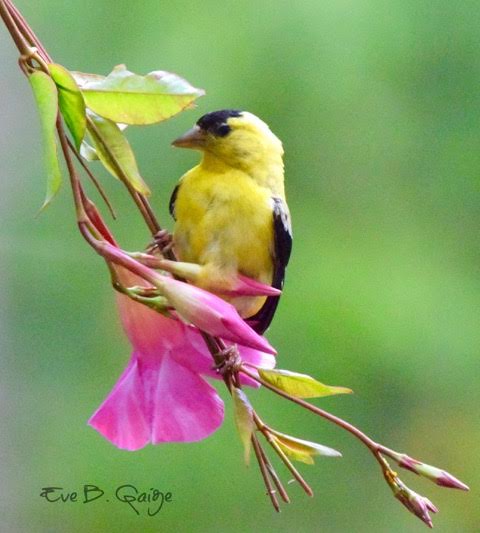
Welcome to The Monticello Bird Club
in Charlottesville, VA
The Monticello Bird Club is an informal group of about 150 people who join together to share their enthusiasm for birds. Our monthly meetings feature invited speakers from throughout the state who share their expertise with entertaining and informative presentations.
Field trips with experienced leaders to local or distant sites take us to where the birds are. You don't have to be a member to join us on any of our birding field trips. Follow this link for information about our currently scheduled field trips.
The 2008-2009 season marks the twenty third anniversary of the Monticello Bird Club. Our meetings and field trips are always open to the public without charge. If you want to learn more about how to identify birds, their behavior and their life histories, or if you just want to talk to others with similar interests, then please join us soon on a field trip or at a meeting.
Please note our new meeting time is 7:00 pm.
The Monticello Bird Club will hold the monthly meetings at 7:00 p.m. on the second Thursday of each month, September through June. The location is the Education Building at Ivy Creek Natural Area, familiar to many as the location of the First Saturday Bird Walks. The Ivy Creek Natural Area is on Earlysville Road about a half mile from the intersection of Hydraulic Road, just before the reservoir. Plenty of parking, compatible natural setting, easy access. See you there at future meetings!
Click here for a map to the Ivy Creek Natural Area (with dial-up connection approx. 20 sec. to load image).
Read our current newsletter online here.
The editor of the MBC Newsletter welcomes
submissions including articles, photographs
and notices. Please email information to Doug Rogers at mbcnews@embarqmail.com or call Doug at 434-409-8156.
Join us at our February 11th Meeting.
Who needs pollination?
This month’s topic, “Who needs
pollination,” is a very timely one.
Much of our everyday food and all of
our flowering plants rely on pollination.
Wind is one effective pollinator but our
world is filled with others: bats, birds,
bees of all sizes and descriptions, even
ants, beetles, and wasps. The flowering
plants have developed ways to attract pollinators, and the pollinators have
developed their strategies to accomplish
what the plant needs.
Today we recognize that pollinators
are in trouble. That trouble comes not
only from us and our actions on this
planet but also from the vagaries of
Mother Nature. Pollinators now need
our help and we can easily provide that
help.
Our presenter, Ann Harman, had a
career as a research chemist. This was
followed by being Head of the Science
Department at a private school. However,
due to her lifelong interest in
honey bees she now serves as a volunteer
teaching beekeeping skills and
modern management techniques in
Third-World Countries. To date she has
worked in 29 countries on five continents
for a total of 51 assignments. She
has received the President’s Volunteer
Service Award three times.
She has served in several international
volunteer organizations helping to
increase the incomes of some of the
poorest people on earth and also to
those countries that had been denied
access to developing technologies.
She is a member of national, regional,
state and local beekeeping associations
and hold offices in several of these. She
is an Eastern Apicultural Society Certified
Master Beekeeper. She actively
teaches beekeeping in the USA in numerous
courses and lectures at beekeeping
association meetings.
She is an active member of the Na
tional Honey Board, an agricultural
marketing board. She is a contributing
author for Bee Culture, a national beekeeping
magazine, and for two international
beekeeping journals. She is
coeditor of Bee Craft America.
She has her own hives of honey
bees. These hives are part of a teaching
apiary used to teach youth about
the value of honey bees as pollinators
of our Virginia crops.
Honey bees serve to enhance gardens
and wildlife forage here in the
Blue Ridge Mountains of Virginia.
If you are looking for places to go birding around Charlottesville, then take a look at
The Birder's Guide to Charlottesvile and Vicinity.
This 34 page booklet was first published by the Monticello Bird Club in 2003. It has been updated to some extent, but not all information has been verified to be accurate at this time. Please let us know if you find that conditions have changed for any of the sites described here. You can download it and print sections of it as you like. Enjoy the birding !
To view or print this booklet you will need the free Acrobat Reader from Adobe. If you don't already have it you can download it here:
![]()
The Monticello Bird Club
Photo of the Month Please submit your photos to kk@ecoventurestravel.com for a future newsletter. |
|
THE MONTICELLO BIRD ALERT
Please note: When you sign up, you'll have the opportunity to see individual messages or receive a daily digest of messages. The individual messages will enable you to see photographs posted with email messages, however the daily digest does not enable photographs to be seen. Since the MonticelloBirdAlert only provides a trickle of a small handful of messages a day, we suggest that you set up your account to receive individual messages. Check out this link to the Macaulay Library, Cornell Lab of Ornithology, for 80 years of recordings of animal sounds and behavior, including 67% of the world's bird species. FREE. Click Here. |
Newsletter Submissions:
Deadline for submissions to the newsletter is the 18th of the month preceding publication. Please email information to Amy Gilmer at akgilmer@comcast.net
or call her at 825-2170.